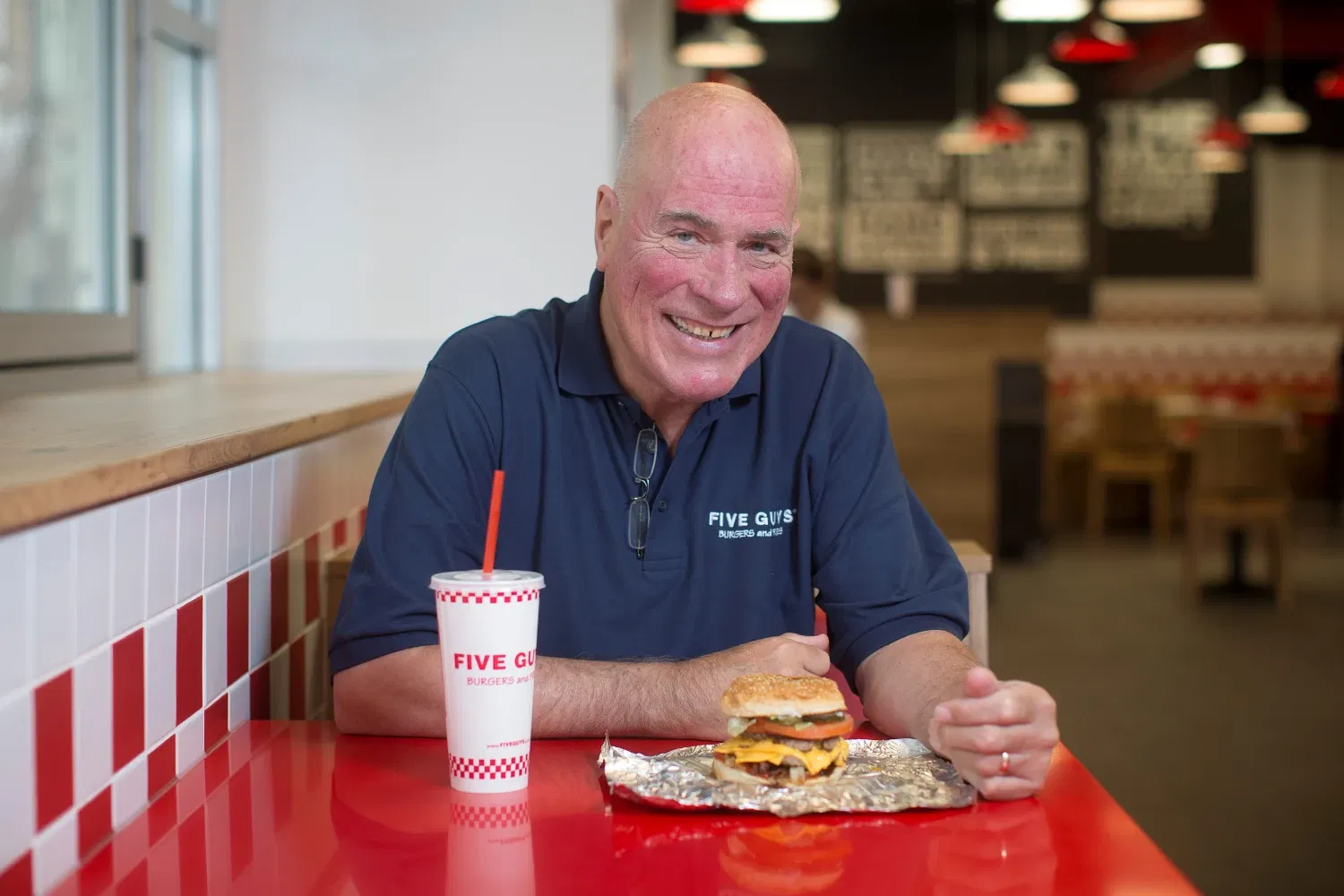
Five Guys CEO Jerry Murrell made headlines this week after distributing $1.5 million in bonuses to employees following a chaotic 40th anniversary promotion that overwhelmed restaurants nationwide. While the story highlights the burger chain's popularity and the CEO's unexpected generosity, it also underscores a critical health conversation about America's fast food consumption habits. The overwhelming response to the "buy one, get one" burger deal reveals just how deeply embedded fast food has become in our culture—and the nutritional consequences that come with that dependence.
How a BOGO Burger Promotion Sparked a $1.5 Million Bonus
In February, Five Guys launched a 40th anniversary celebration offering customers a buy-one-get-one-free burger deal. What the company didn't anticipate was the viral response that would crash their app, overwhelm locations with customers, and force some stores to close early due to food shortages. According to Fortune's interview with Murrell published March 25, the promotion "spread far beyond what the company had anticipated," creating what employees described as "pure chaos" at many locations.
The situation became so dire that Five Guys issued two separate apologies—one on February 18 acknowledging that "hardworking crews were placed in a difficult situation" and another on March 9 admitting "we weren't ready for you." In response to the debacle, Murrell decided to distribute approximately $1.5 million in bonuses across the chain's 1,500 U.S. locations, with each store receiving about $1,000 for their employees.
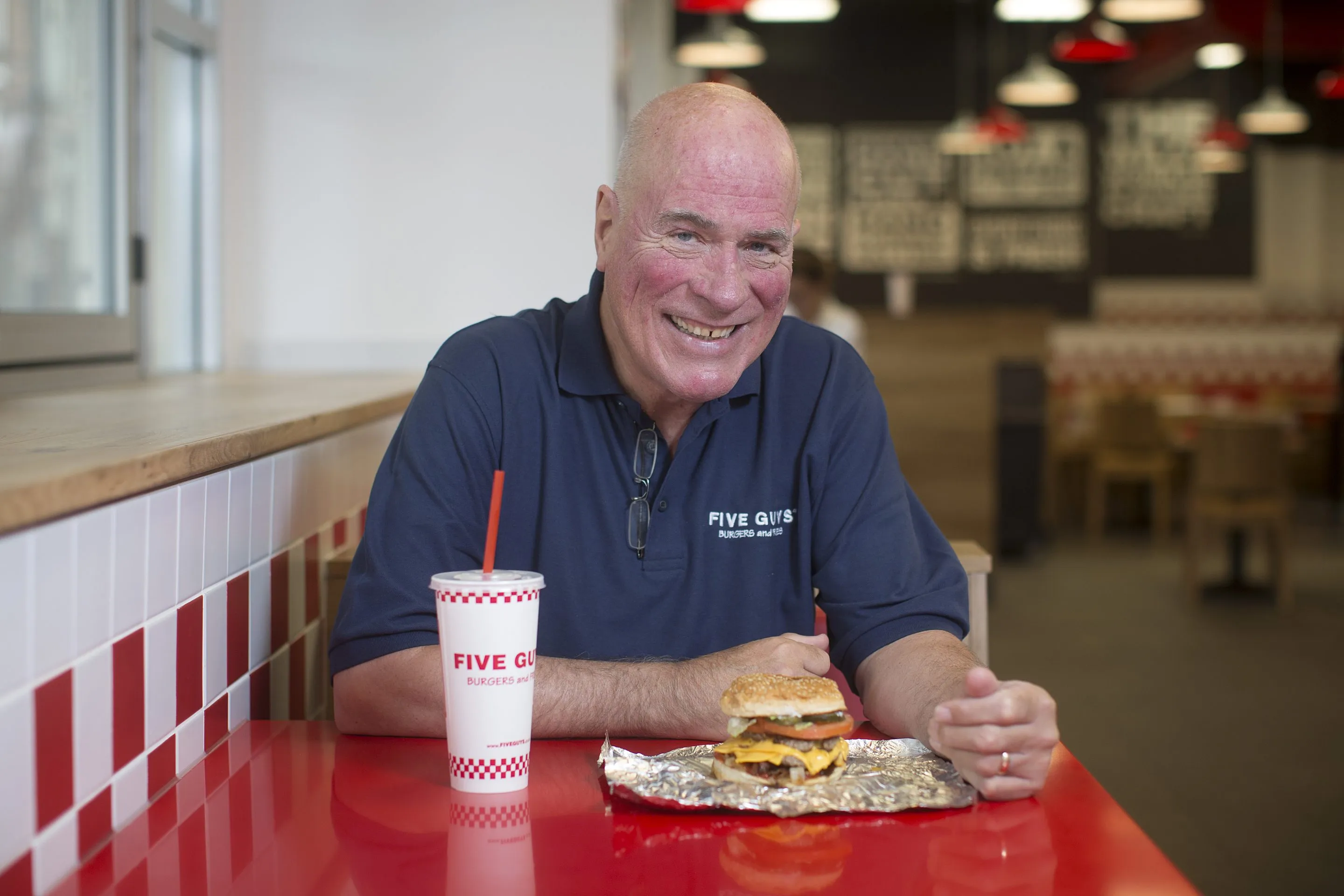
Murrell's reasoning, delivered with his characteristic dry humor, revealed both his concern for employees and a darker cultural reference point. "I didn't want anybody shooting me in the back or anything after the first day, because we really screwed it up," he told Fortune, joking that he had originally planned to buy his wife "a new fur coat" but spent the money on employee bonuses instead. The comment references the 2025 shooting of UnitedHealthcare CEO Brian Thompson, highlighting the heightened security concerns facing corporate leaders today.
The Nutritional Reality Behind Five Guys' Popularity
While the promotional frenzy demonstrates Five Guys' enduring popularity, nutrition data reveals why health-conscious consumers should approach their menu with caution. A single Five Guys cheeseburger contains 840 calories, 55 grams of total fat (85% of daily value), and a staggering 26.5 grams of saturated fat—133% of the recommended daily limit for someone consuming 2,000 calories per day. The sodium content is equally concerning at 1,050 milligrams, representing 46% of the daily maximum recommended by the American Heart Association.
According to nutrition analysis from Eat This Not That, Five Guys cheeseburgers rank among the unhealthiest fast food options available, with saturated fat levels 73% higher than many competing burger chains. "While the fresh ingredients and customizable toppings are appealing, the nutritional profile tells a different story," explains registered dietitian Sarah Williams. "A single burger can contain more than a day's worth of saturated fat, which directly impacts heart health and cholesterol levels."
The issue extends beyond just the burgers. Five Guys' famous fries, cooked in peanut oil, add another 620 calories and 30 grams of fat for a regular order. Combine these with a milkshake (another 670+ calories), and a single meal can easily exceed 2,000 calories—the recommended daily intake for many adults.
6 Expert-Recommended Strategies for Healthier Fast Food Choices
Despite the concerning nutrition facts, nutrition experts agree that occasional fast food consumption can fit into a balanced lifestyle when approached strategically. Scripps Health nutritionists recently published six evidence-based tips for making healthier choices when eating at fast food restaurants:
- Watch your portion sizes: Opt for smaller burgers or single patties instead of double or triple options. Consider sharing fries or choosing a kids' meal portion.
- Swap fries for healthier sides: Many chains now offer side salads, apple slices, or yogurt. At Five Guys, consider skipping fries altogether or sharing a small order.
- Choose grilled over fried: While not always available at burger chains, this principle applies to chicken sandwiches and other protein options at mixed-menu restaurants.
- Load up on vegetables: Customize your burger with lettuce, tomato, onion, pickles, and other veggie toppings to add nutrients and fiber without significant calories.
- Be sauce-smart: Condiments like mayonnaise, special sauces, and dressings can add hundreds of calories. Request sauces on the side or choose mustard, ketchup, or vinegar-based options.
- Consider bun alternatives: Some chains offer lettuce wraps or protein-style burgers that eliminate refined carbohydrates and reduce calorie counts.
"The key is mindfulness, not deprivation," says Dr. Michael Chen, a preventive cardiologist. "Understanding what you're consuming allows you to make informed choices. If you really want that cheeseburger, balance it with lighter meals earlier in the day and increase your physical activity."
Fast Food's Double-Edged Sword: Employee Bonuses and Public Health
Murrell's $1.5 million bonus distribution highlights an often-overlooked aspect of the fast food industry: the challenging working conditions faced by employees during promotional surges. While the financial recognition is commendable, it also underscores the physical and mental strain placed on workers during high-volume periods.
From a public health perspective, the overwhelming response to the BOGO promotion reveals deeper societal patterns. "When a burger promotion crashes apps and overwhelms stores, it tells us something about food priorities in our culture," observes public health researcher Dr. Elena Rodriguez. "We need to ask why discounted access to high-calorie, high-fat foods generates such explosive demand while healthy food initiatives often struggle for attention."
Nutrition advocates point to the need for balanced messaging. "Celebrating employee recognition is important, but we shouldn't ignore the health implications of the products themselves," says nutrition policy expert James Wilson. "Companies like Five Guys have an opportunity to lead by offering more balanced menu options while maintaining their core offerings."
What Nutritionists Say About Balancing Indulgence and Health
Registered dietitians emphasize that occasional indulgence in favorite foods like Five Guys burgers can be part of a sustainable healthy lifestyle. The problem arises when such meals become regular habits rather than occasional treats.
"I advise clients to follow the 80/20 rule," says nutritionist Lisa Tran. "Eat nutrient-dense, whole foods 80% of the time, and leave 20% for enjoyment foods. If Five Guys is your favorite, plan for it. Maybe have a lighter lunch if you know you're having it for dinner, and be sure to include plenty of vegetables with your meal."
For those who frequent Five Guys, experts suggest these modifications to improve the nutritional profile:
- Choose the Little Hamburger: At 540 calories with 26g of fat, it's a more reasonable option than the full cheeseburger.
- Skip the cheese: Eliminating American cheese saves approximately 100 calories and reduces saturated fat.
- Load up on veggie toppings: Mushrooms, onions, lettuce, tomatoes, and pickles add flavor and nutrients with minimal calories.
- Share the fries: A regular fry order contains 620 calories—splitting it cuts your intake in half.
- Choose water or unsweetened tea instead of sugary sodas or milkshakes.
The Bottom Line: Informed Choices in a Fast Food World
The story of Five Guys' $1.5 million employee bonuses reveals much about our relationship with fast food. While we can appreciate the company's recognition of overwhelmed workers and the CEO's unexpected generosity, the nutritional reality of what caused that overwhelming demand deserves equal attention.
Fast food chains like Five Guys aren't going anywhere—and occasional enjoyment of their products can be part of a balanced lifestyle. The key lies in informed decision-making: understanding the nutritional impact of your choices, implementing expert-recommended strategies for healthier modifications, and maintaining perspective about frequency and portion sizes.
As Murrell himself noted about the bonus decision, "I thought it was worth it. They worked so hard." Perhaps the same thoughtful consideration should apply to our food choices—recognizing that what we put into our bodies represents an investment in our long-term health, one burger at a time.