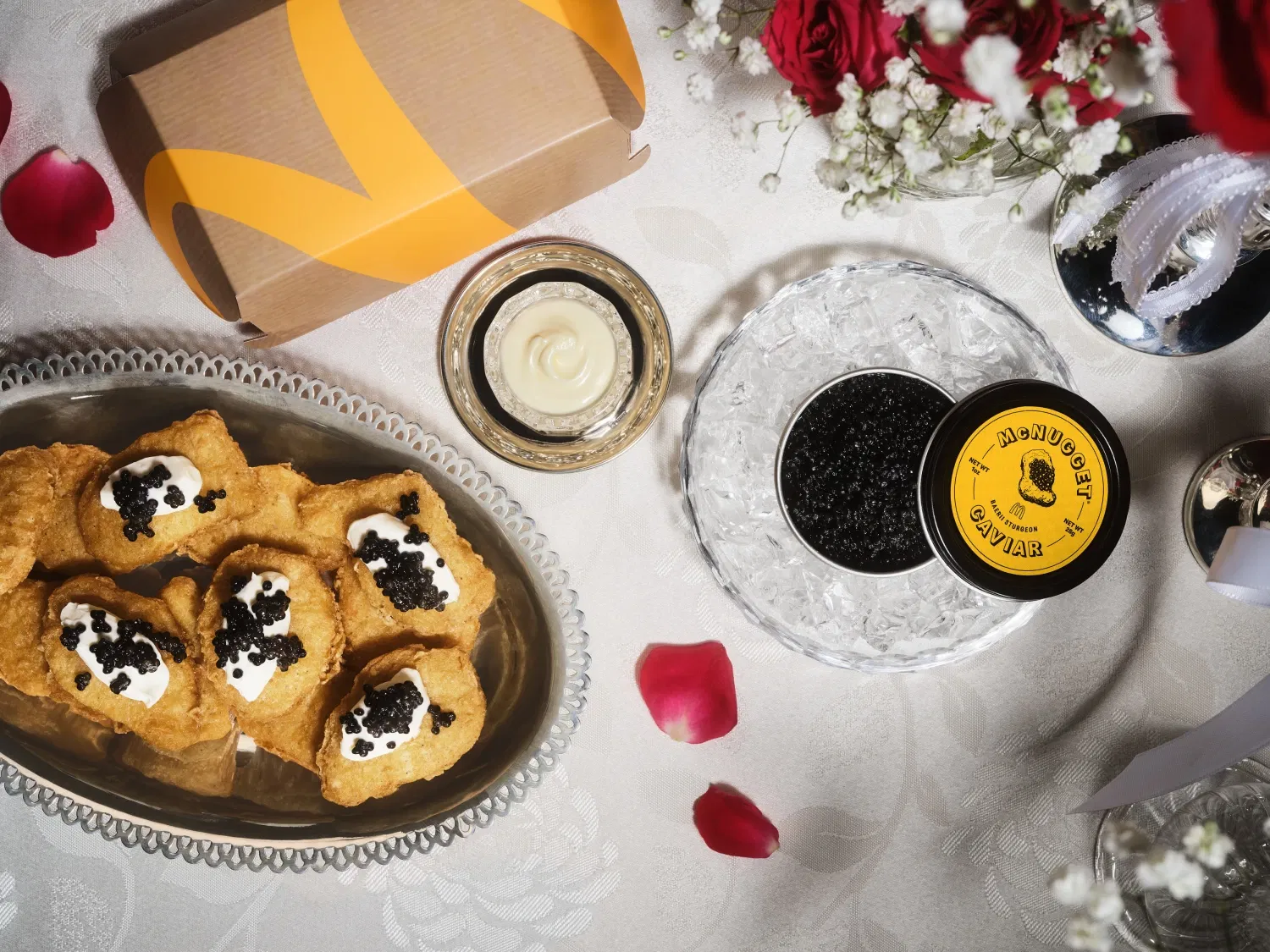
McDonald's limited-edition McNugget Caviar Kits sold out within minutes after launching on February 10, crashing the promotional website and sparking a frenzy among fast-food fans and luxury food enthusiasts alike. The free Valentine's Day promotion, which paired premium Baerii Sturgeon caviar with classic Chicken McNuggets, highlights a growing trend of high-low food mashups—but also raises important questions about nutrition, indulgence, and healthier alternatives for special occasions.
How McDonald's Caviar Kits Sparked a Valentine's Day Frenzy
In a surprise move that blurred the lines between fast food and fine dining, McDonald's teamed up with Paramount Caviar to release the McNugget Caviar Kit just ahead of Valentine's Day 2026. Each kit included a one-ounce tin of Baerii Sturgeon caviar, crème fraîche, a mother-of-pearl caviar spoon, and a $25 McDonald's Arch Card to purchase Chicken McNuggets. The kits were available exclusively online at McNuggetCaviar.com starting at 11 a.m. ET on February 10, and—as the company warned—supplies were extremely limited.
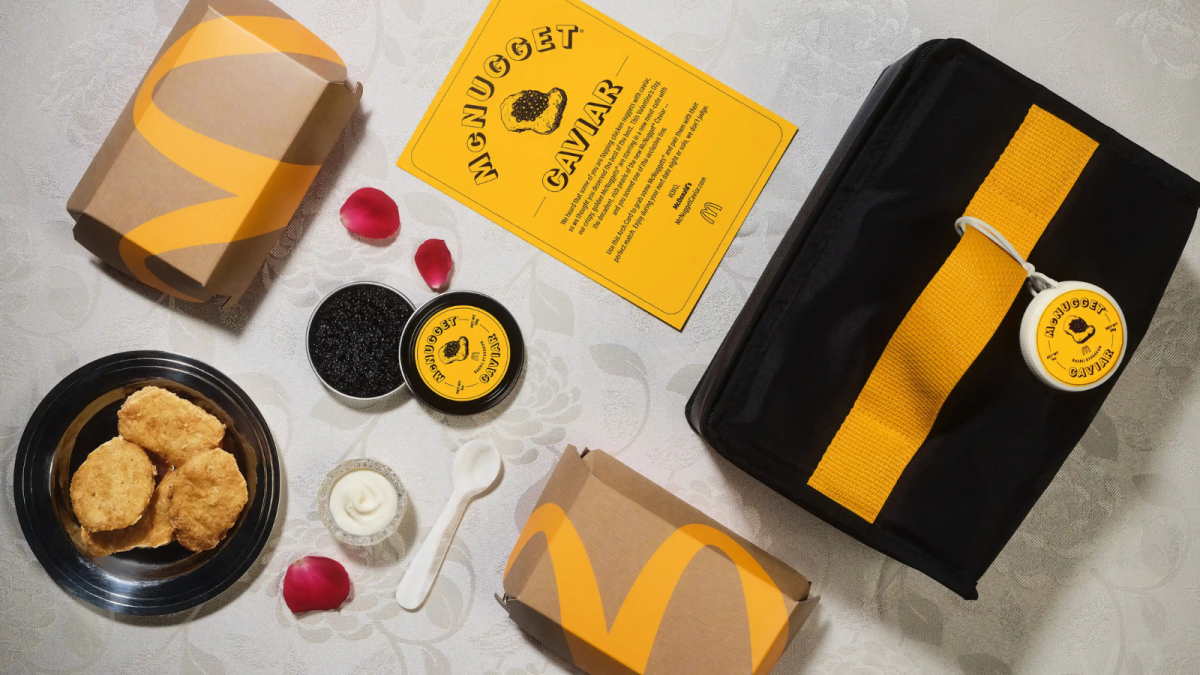
“After all, nothing says ‘ILY’ quite like a limited drop from McDonald's just in time for your Valentine's Day plans,” the company said in its press release. The collaboration was inspired by a viral social-media trend that saw celebrities like Rihanna posting about caviar-topped nuggets as a “soccer mom snack” in late 2024, and a $100 version served at the Korean fried‑chicken restaurant COQODAQ during the U.S. Open.
From Viral Trend to Sold‑Out Sensation: A Timeline
The journey from niche luxury treat to a McDonald's promotional phenomenon happened faster than a drive‑thru order. In December 2024, Rihanna shared an Instagram photo of caviar‑topped chicken nuggets, calling it her favorite indulgent snack. Just weeks later, New York City's COQODAQ debuted the “Golden Nugget”—a single fried‑chicken nugget heaped with Petrossian caviar and crème fraîche—for $100, turning the pairing into a talk‑of‑the‑town dish.
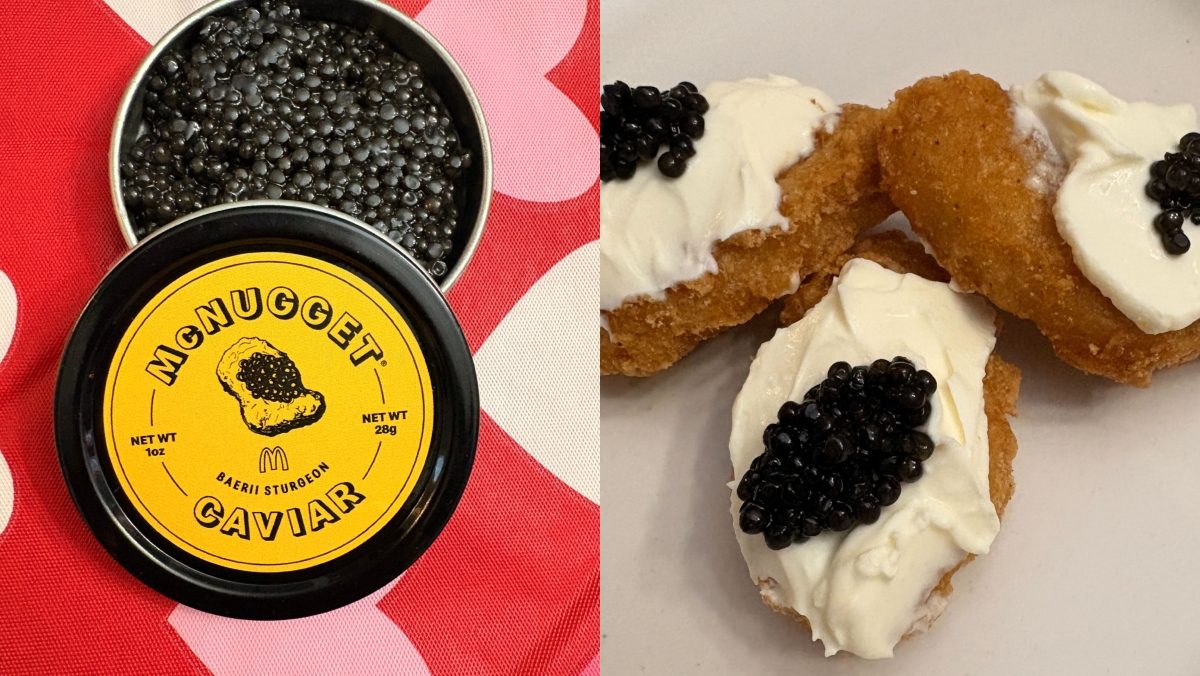
McDonald's officially announced the McNugget Caviar Kit on February 2, 2026, promising a free, limited‑edition drop for Valentine's Day. On launch day, February 10, the dedicated website crashed minutes after going live, and all 750 kits were claimed almost instantly. Frustrated fans took to social media with comments like, “PLEASE, PLEASE, I NEED MCNUGGET CAVIAR, WHAT IS THIS,” while resellers quickly listed the kits on eBay for upwards of $400.
Nutritional Breakdown: Caviar Meets Fast Food
While the pairing is undeniably novel, its health profile is a study in contrasts. Caviar is rich in omega‑3 fatty acids, vitamin B12, and selenium, but it's also high in sodium and cholesterol—a single ounce can contain nearly 500 mg of sodium. Chicken McNuggets, on the other hand, are a processed fast‑food item typically high in saturated fat, sodium, and calories. A standard 10‑piece serving delivers about 440 calories, 26 g of fat, and 900 mg of sodium.
“This promotion is a classic example of ‘indulgence marketing,’” says registered dietitian and nutrition expert Dr. Maya Chen, who notes that while caviar offers some nutritional benefits, combining it with deep‑fried nuggets creates a meal that's excessively high in sodium and unhealthy fats. “For those looking to enjoy a special treat, consider pairing a small amount of caviar with whole‑grain crackers or sliced vegetables instead of fried chicken, and balance the rest of the day with plenty of fresh produce and lean protein.”
Where the McDonald's Caviar Craze Stands Now
As of February 2026, the McNugget Caviar Kits are completely sold out, and McDonald's has no plans to restock them. The McNuggetCaviar.com website now displays a message reading, “Unfortunately, our McNugget Caviar was everyone's Valentine this year, and has flown off the shelves.” Social‑media buzz continues, with many users sharing mock‑ups of their own DIY caviar‑and‑nugget creations, while others criticize the promotion as a wasteful stunt that highlights food inequality.
Despite the sell‑out, the conversation has shifted to the broader implications of luxury fast‑food collaborations. “This isn't just about caviar and nuggets—it's about how brands use scarcity and novelty to drive demand, often at the expense of healthier eating habits,” says food‑industry analyst David Park. “We're likely to see more of these high‑low partnerships, but consumers should be aware of the nutritional trade‑offs.”
What's Next for Fast‑Food Luxury and Healthier Alternatives
Industry experts predict that other fast‑food chains may attempt similar limited‑edition luxury pairings, leveraging social‑media virality and scarcity marketing. For health‑conscious consumers, however, there are plenty of ways to enjoy a special Valentine's Day without the excess sodium and processed ingredients.
Consider preparing a homemade “luxury nugget” bowl with baked chicken tenders, a tablespoon of caviar (or a cheaper fish‑roe alternative), a dollop of Greek yogurt, and fresh herbs. Or opt for a romantic picnic with whole‑grain bread, smoked salmon, avocado, and a side of mixed berries. “The goal isn't to avoid treats altogether, but to make mindful choices that balance indulgence with nutrition,” Dr. Chen emphasizes.
Key Takeaways from the McNugget Caviar Phenomenon
- Limited availability drives demand: Only 750 McDonald's McNugget Caviar Kits were produced, causing a near‑instant sell‑out and secondary‑market markups.
- Viral trends influence mainstream promotions: Celebrity endorsements and high‑end restaurant dishes paved the way for McDonald's to adopt the caviar‑and‑nugget combo.
- Nutritional trade‑offs are significant: While caviar offers some health benefits, pairing it with fried nuggets creates a meal high in sodium, cholesterol, and unhealthy fats.
- Healthier alternatives exist: Enjoy luxury ingredients in moderation with whole‑food bases like vegetables, whole grains, or lean proteins instead of processed fast food.