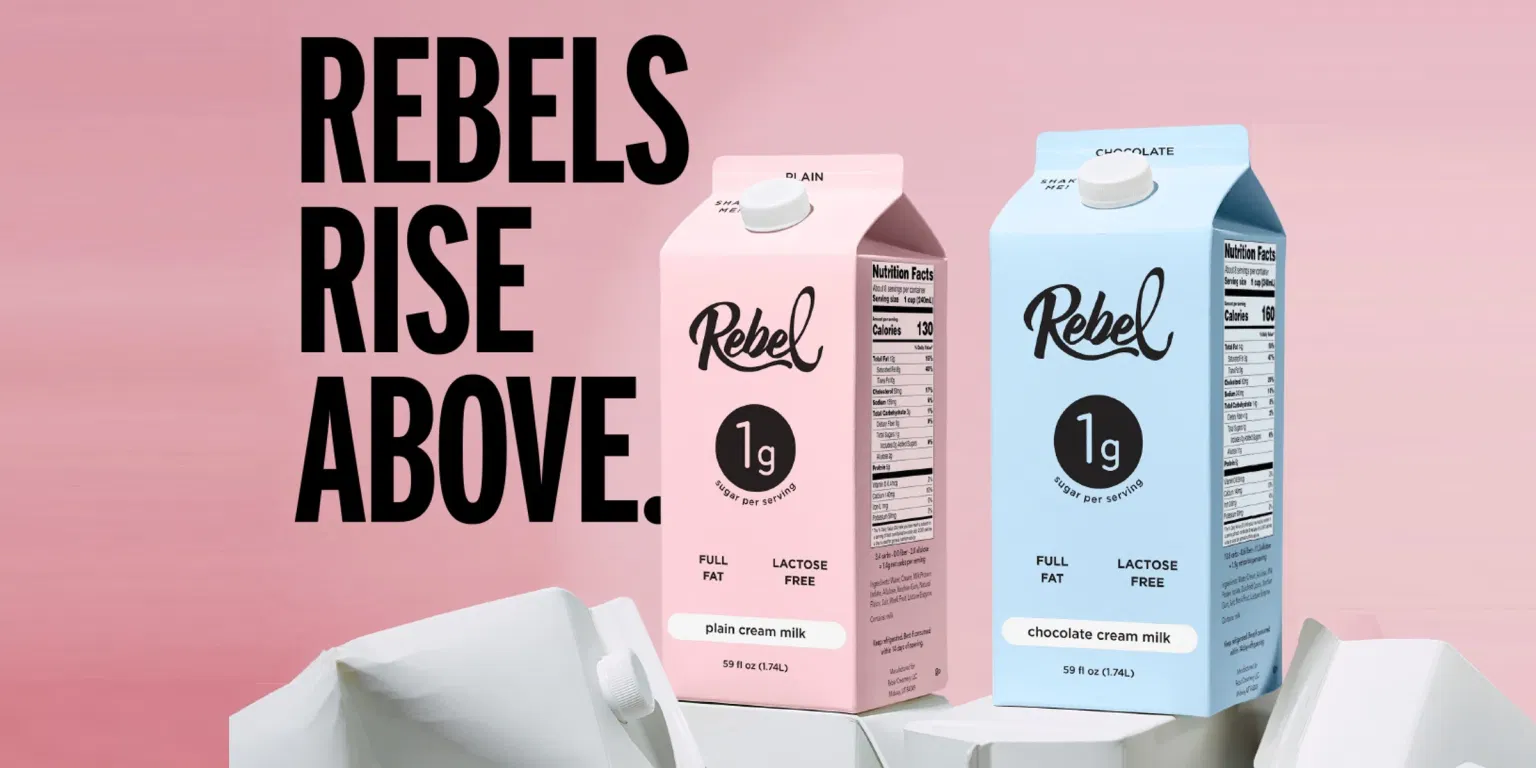
Rebel Creamery has built a devoted following among keto dieters, low-carb eaters, and anyone trying to cut sugar without giving up dessert. Officially operating as Rebel Creamery LLC and sold under the Rebel Ice Cream name, the brand makes full-fat, no-sugar-added ice cream — and a newer line of zero-sugar milk — designed to keep blood sugar and insulin levels in check. With search interest for the brand topping 200,000 monthly searches, Rebel Creamery has become one of the most recognizable names in the fast-growing "better-for-you" ice cream category, and its claim to the lowest net carb pint on the market sits at the center of its appeal.
What Is Rebel Creamery? Full-Fat Ice Cream Built for Keto
Rebel Creamery's core promise is straightforward: creamy, real ice cream without the sugar and carb load that make conventional pints a problem for keto and low-carb diets. The brand describes itself as "low carb, high fat, keto, no sugar added" and leans into fat rather than hiding from it. According to the company, 85 to 90 percent of the calories in Rebel Ice Cream come from quality animal fats — a share it calls the highest on the market.
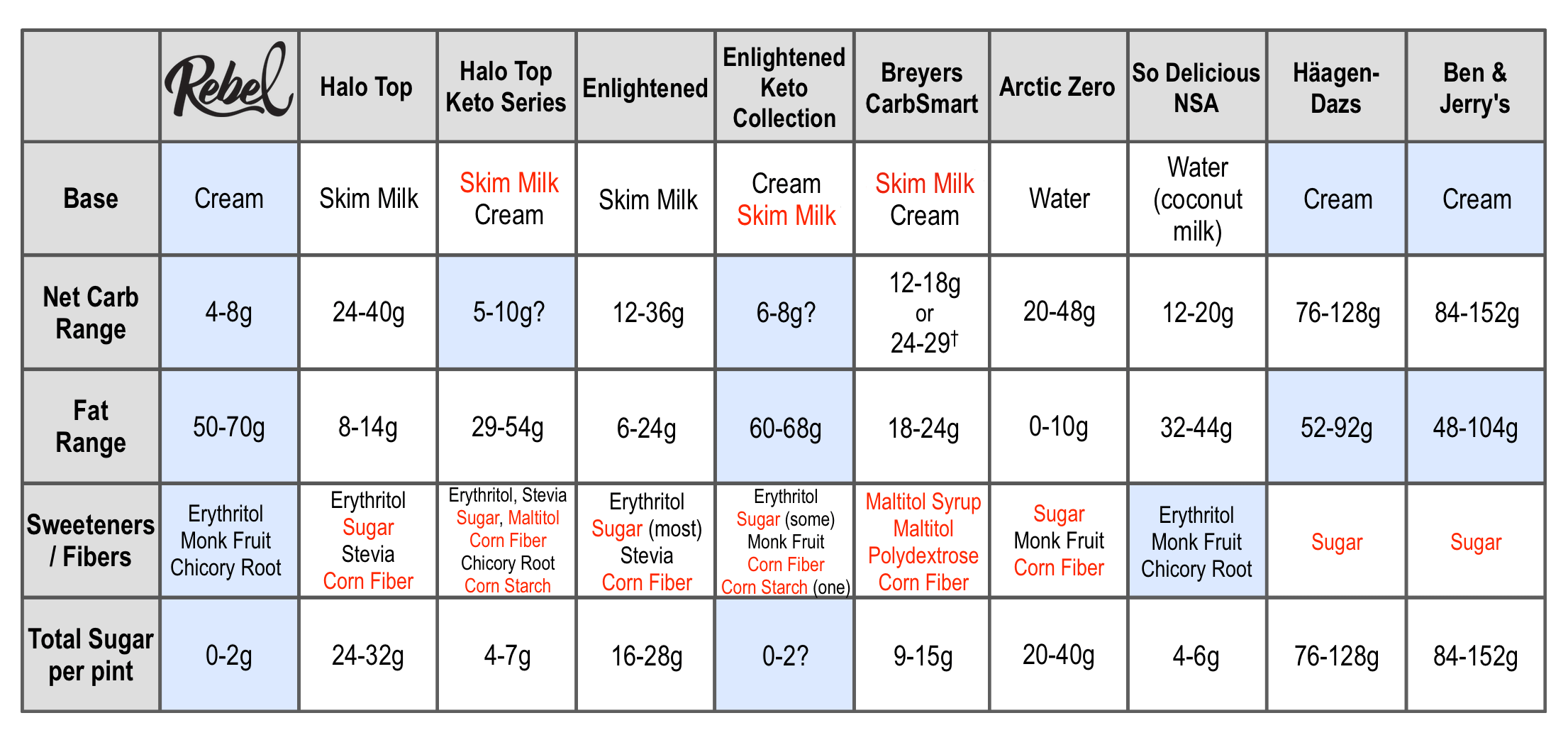
Instead of the skim milk that many "diet" ice creams rely on, Rebel builds its base on heavy cream from rBST- and hormone-free cows, plus egg yolks for a smooth, slow-melting texture. It sweetens with erythritol and monk fruit — two zero-glycemic sweeteners — and uses chicory root fiber and vegetable glycerin for structure, along with small amounts of milk protein isolate and natural gums. The result, the brand says, is a pint that keeps most flavors between roughly 1.4 and 2.4 grams of net carbs per serving — about 4.2 to 7.2 grams for an entire pint, depending on the flavor.
The lineup spans more than 20 flavors, from classics such as Vanilla, Chocolate, Strawberry, and Mint Chip to richer options including Cookie Dough, Peanut Butter Fudge, Salted Caramel, Butter Pecan, Cookies & Cream, Triple Chocolate, and Neapolitan.
From an $80,000 Kickstarter to Grocery Store Shelves
Rebel Creamery's origin starts in a home kitchen. Founders Austin and Courtney — the brand signs its "Our Story" page with their first names — had been making homemade ice cream for years before they decided to stop eating sugar. After switching their fuel source to healthy fats, they found no zero-sugar, full-fat ice cream existed that kept the creamy texture of the real thing, so they set out to "ketofy" their favorite recipes with help from food scientists.
To test demand, the couple launched a Kickstarter campaign in December 2017. It hit its funding goal within three hours of launch and ultimately raised about $80,000, which Rebel describes as one of the largest crowdfunding campaigns for a perishable food product in the small-batch category at the time. That early wave of demand, the company says, helped push the brand into thousands of grocery stores across the country.

Why Rebel Creamery Calls Itself the Lowest-Glycemic Ice Cream
Rebel's main differentiator is its focus on glycemic impact, not just calories. The company claims to be the lowest glycemic index ice cream on the market because it only uses zero-glycemic fibers and sweeteners. It contrasts heavy cream — which carries a glycemic index of 0 — with skim milk, which has a glycemic index of about 46 and appears in many other low-carb ice creams. It also points out that the corn fiber (GI 25) used by some competitors ranks higher on the glycemic index than the chicory root fiber (GI 0) Rebel uses.
The brand also takes a hard line on label transparency, saying it provides exact decimals for carbs, fiber, and sugar alcohols rather than "rounding games." Net carbs are calculated by subtracting fiber and sugar alcohols from total carbohydrates — a distinction that matters because most keto dieters aim to stay under roughly 20 grams of net carbs per day.
There is one important caveat: Rebel Ice Cream is "not a low calorie food," a disclaimer the company prints on its own site. Because the pints are full-fat and calorie-dense, the selling point is metabolic impact, satiety, and texture rather than a small calorie count — the same reason Rebel argues that full-fat treats are more satisfying and less likely to lead to carb or sugar overconsumption than low-fat alternatives.
Where to Buy Rebel Creamery and What It Costs
Rebel Ice Cream is sold online through the company's website and in grocery stores across the United States. Online orders ship frozen in coolers packed with dry ice and generally go out within three to five business days. Pints are bundled into eight-pint cases of a single flavor, priced at $55.92 per case — about $6.99 per pint.
Shipping costs scale with order size: $19.99 for orders under $70, $14.99 for orders over $70, $9.99 for orders over $100, and free shipping on orders over $150. The company says it is prioritizing grocery distribution, where prices are lower and shopping is more flexible. Rebel Creamery also notes it does not currently ship to Canada, citing the cost and complexity of Canadian dairy regulations, though it hopes to enter that market down the road.
What's Next for the Rebel Creamery Lineup
Rebel Creamery has already expanded well beyond the original pint. The brand now sells zero-sugar, full-fat "Rebel Milk," signaling that it sees its low-glycemic, high-fat approach as a platform rather than a single product. As keto and low-carb eating remain a major force in the wellness world — and shoppers increasingly scrutinize net carb and ingredient labels — Rebel's focus on transparent nutrition and 0-glycemic sweeteners positions it to keep growing both its flavor roster and its retail footprint.
The Bottom Line on Rebel Creamery
- What it is: Rebel Creamery LLC (sold as Rebel Ice Cream) makes full-fat, no-sugar-added, keto-friendly ice cream and zero-sugar milk.
- How it started: Founders Austin and Courtney launched it via a December 2017 Kickstarter that raised about $80,000.
- Nutrition: Most flavors land between roughly 1.4 and 2.4 grams of net carbs per serving (4.2 to 7.2 grams per pint), with 85-90% of calories from animal fat.
- Sweeteners: Erythritol and monk fruit (with allulose in some inclusions) keep the glycemic impact near zero.
- The catch: It is not a low-calorie food — it is designed for keto and low-carb eaters prioritizing low sugar and high fat.
- Availability: Sold online in eight-pint cases for $55.92 and in U.S. grocery stores, with free shipping on orders over $150.