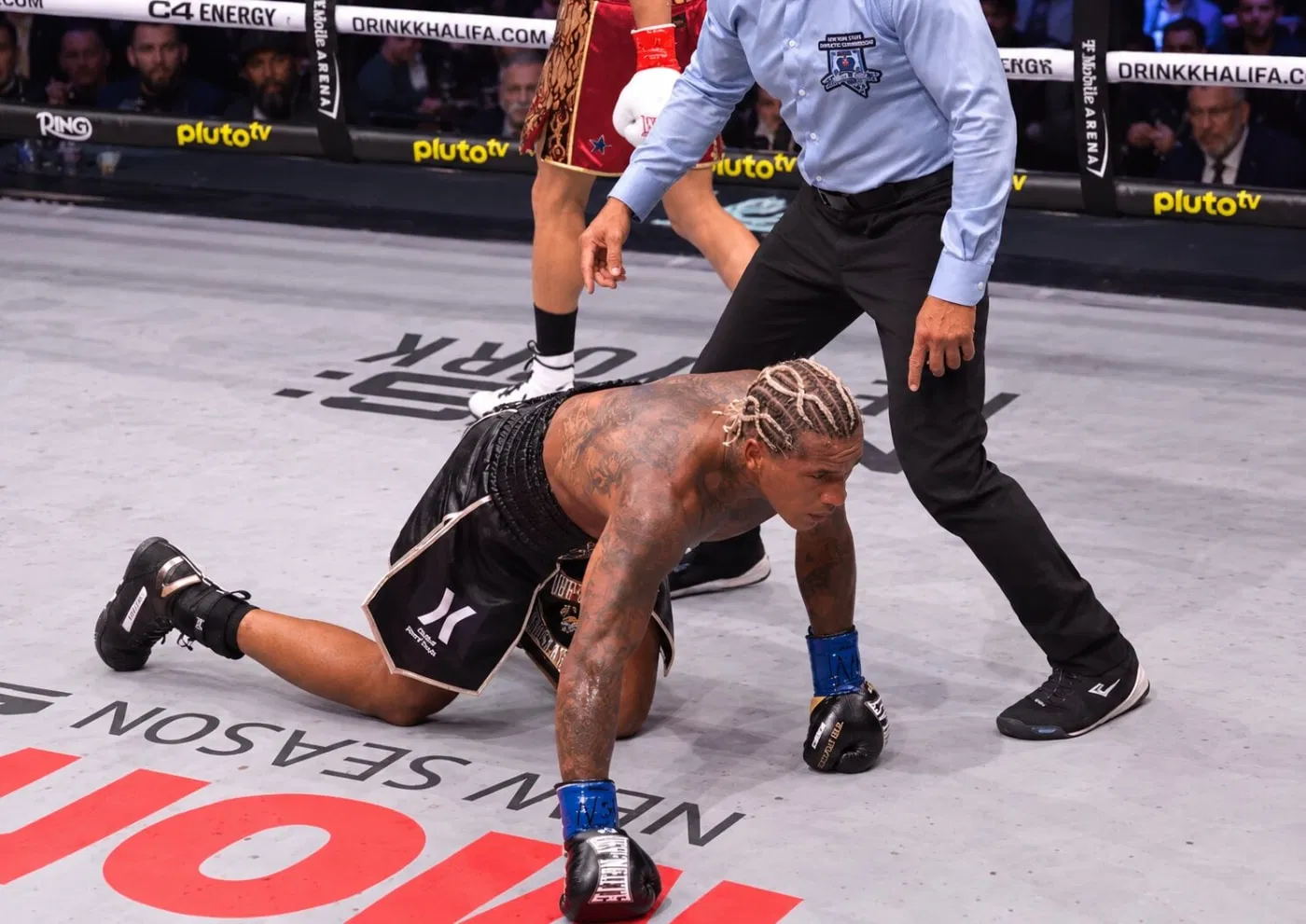
Ryan Garcia needed just 85 seconds of the second round to remind the fitness world what elite speed, power, and conditioning look like when they collide in a single athlete. The 28-year-old stopped Conor Benn by second-round technical knockout on Saturday night at T-Mobile Arena in Las Vegas, defending his WBC welterweight title in his first defense and closing the latest chapter of one of boxing's most turbulent — and physically demanding — careers.
Garcia (26-2, 21 KOs) dropped Benn with an overhand right early in the second round. Benn beat referee Thomas Taylor's count, but Garcia backed him against the ropes and kept landing until Taylor waved the fight off at 1:25. Benn protested the stoppage, though ringside reports said the challenger was badly hurt and offering little in return when the referee intervened. The win was a statement about more than a belt: it was a display of the speed, rotational power, and sustained conditioning that make boxing one of the toughest workouts in sport.
How the Fight Unfolded: Speed, Power, and a Finisher's Mindset
The finish was a snapshot of the two physical tools Garcia has built his entire career around: blinding hand speed and a fight-ending left hook. According to Boxing News 24's live coverage, Benn pressed throughout the opening round, but Garcia boxed from the outside and staggered him with a left hook before catching the challenger with a right uppercut when Benn ducked low. The second-round overhand right that ended the night was the same compact, rotational power that has now produced 21 knockouts across 26 career wins.
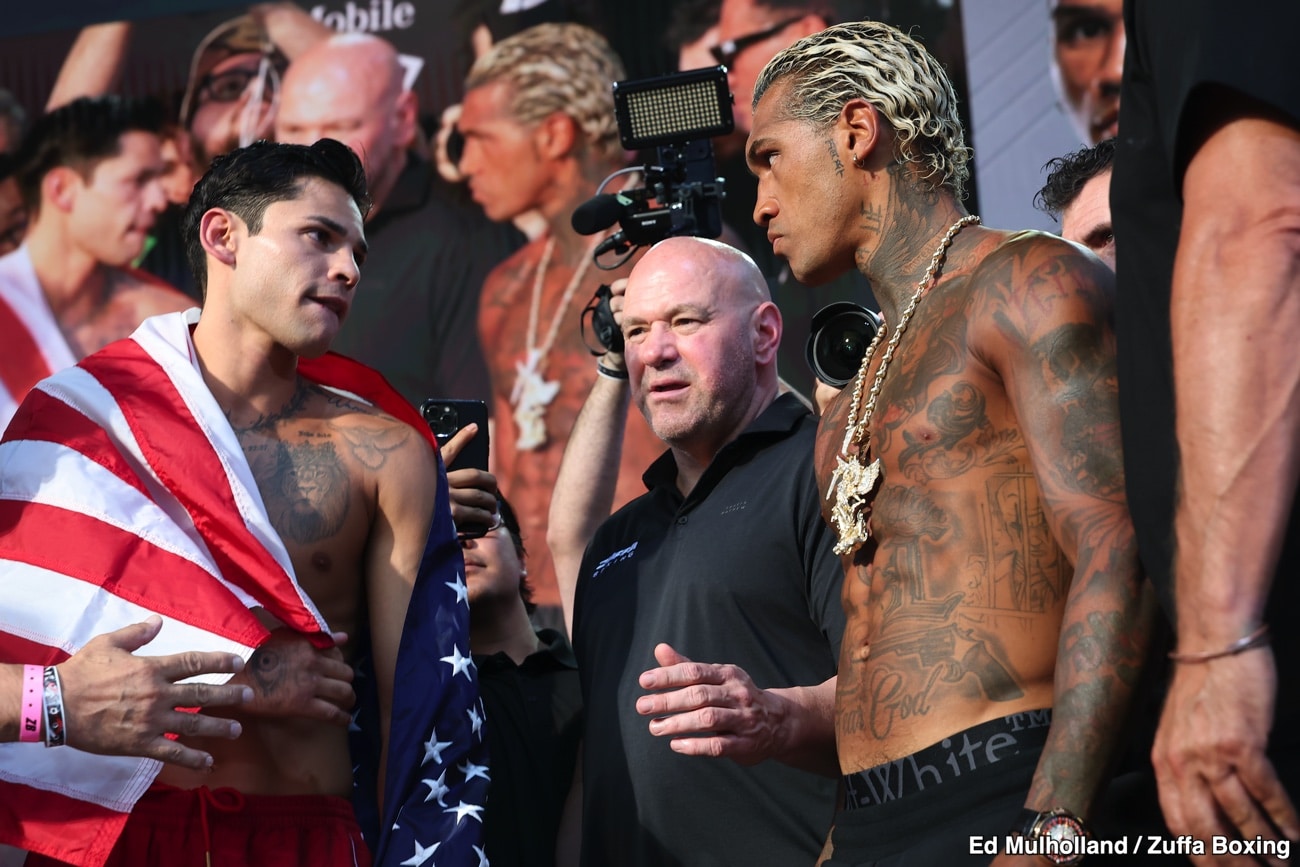
For everyday gym-goers, that knockout power carries a clear training lesson. A fight-ending hook is not generated by arm strength alone — it is driven from the hips and core through rotational force, the same biomechanics used in medicine-ball throws, cable rotations, and rotational core work. Garcia's signature body-shot finishes and his ability to sit down on punches come from years of explosive, full-body conditioning rather than isolated lifting. If your goal is functional strength that translates to real-world power, rotational core training is a better investment than endless bicep curls.
Timeline: From 136 Pounds to Welterweight Champion
Garcia's road to this title defense is also a study in long-term weight management, a challenge many people face in their own fitness journeys. He has fought across four weight classes — super featherweight, lightweight, light welterweight, and now welterweight — climbing from a 136-pound catchweight for his 2023 fight with Gervonta Davis all the way up to the 147-pound welterweight limit.
- April 2023: Garcia dropped to a 136-pound catchweight (with a 146-pound rehydration clause) to face Gervonta Davis, suffering his first career loss by seventh-round body-shot knockout.
- April 2024: Garcia defeated Devin Haney, a result later overturned to a no contest after a positive test for the banned substance ostarine triggered a one-year suspension.
- May 2, 2025: Garcia returned and lost a unanimous decision to Rolando Romero in New York's Times Square.
- February 21, 2026: Garcia defeated Mario Barrios by unanimous decision — scoring a first-round knockdown — to claim the WBC welterweight title.
- September 12, 2026: Garcia stopped Conor Benn in two rounds to retain the belt in his first defense.
That climb through the divisions is a reminder that sustainable weight management is gradual. Garcia's move up in weight, rather than repeated extreme cuts, reflects the kind of long-term approach to body composition that beats crash dieting — a principle that applies far beyond the ring.
What Makes Ryan Garcia's Training Work
Garcia's preparation has never been a one-coach operation. Early in his professional career he trained under Eddy Reynoso, the renowned cornerman behind Canelo Alvarez, before moving to Joe Goossen in 2022. His father, Henry Garcia, has remained a constant presence as one of his trainers since his amateur days. That layered approach — elite instruction plus a trusted family support system — mirrors what sports scientists often emphasize: accountability and consistency matter as much as the workout itself.
Garcia has also embraced cross-training. In December 2022 he began training in Brazilian jiu-jitsu under Rener Gracie, adding grappling work to a boxing regimen built on footwork, hand speed, and punch output. For non-boxers, the takeaway is simple: mixing disciplines and movement patterns can improve overall athleticism, mobility, and injury resilience.
Perhaps the most important — and most overlooked — part of Garcia's story is mental. He has been open about living with bipolar disorder and his struggles with alcoholism, and his family has publicly described his "ongoing struggle with mental health." His return to championship form after a suspension, a period of controversy, and a 2025 loss underscores a truth fitness culture often ignores: physical performance is inseparable from mental recovery, sleep, and daily routine. Building the habit of training — even on hard days — is as much a mental-health tool as a physical one.
Where Ryan Garcia Stands Now
With the second-round stoppage, Garcia is firmly established as the WBC welterweight champion with a 26-2 (1) record and 21 knockouts. The bout, billed as "USA vs. UK," was co-promoted by Zuffa Boxing and Golden Boy Promotions in partnership with The Ring magazine and streamed on Paramount+, with DAZN carrying the event in the United Kingdom and Ireland. On the undercard, cruiserweight Jai Opetaia stopped Noel Mikaelian in the ninth round, and lightweight Andres Cortes outpointed former champion Mark Magsayo.
For Garcia, the victory validated a rebuild that began with his unanimous-decision win over Barrios in February. Less than two years after a suspension threatened to derail his career, he has reclaimed a world title and defended it emphatically.
What's Next for "King Ry"
The welterweight division now revolves around Garcia. Immediately after the fight, ringside coverage noted calls for bigger matchups, with Garcia calling Teofimo Lopez into the ring and Devin Haney publicly pushing for a rematch of their controversial 2024 bout. A unification fight or a high-profile rematch would be the natural next step, and either would demand another full training camp — more roadwork, more rotational power work, and more disciplined weight management at 147 pounds.
The Bottom Line: Fitness Lessons From a Knockout
- Power comes from the core, not the arms: Garcia's finishing hooks are built on rotational strength, a reminder to train your hips and torso for functional power.
- Conditioning wins fights: Boxing demands explosive output across 12 rounds; steady cardio plus high-intensity intervals mirror that demand.
- Weight management is a marathon: Garcia's gradual climb through four weight classes beats extreme, unsustainable cuts.
- Mental health is part of fitness: Garcia's comeback shows that recovery, routine, and support systems are foundational to physical performance.
Whether or not you ever step in a ring, the principles behind Ryan Garcia's second-round TKO — explosive rotational strength, disciplined conditioning, and a rebuilt daily routine — are the same ones that drive any lasting fitness transformation.