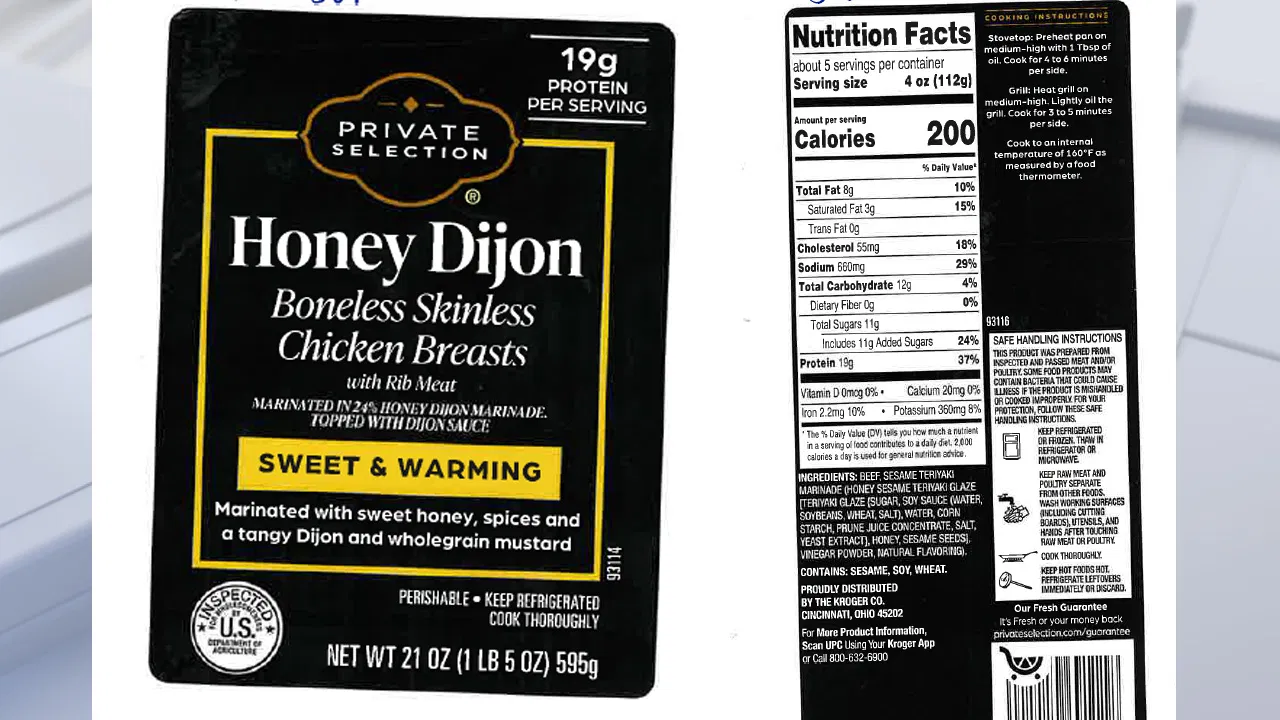
If you've recently picked up chicken from Kroger or Fred Meyer, it's time to take a closer look inside your freezer. The U.S. Department of Agriculture's Food Safety and Inspection Service (FSIS) has issued a public health alert for Private Selection Honey Dijon Boneless Skinless Chicken Breasts with Rib Meat — a product sold across nine states — after discovering it contains an undeclared egg allergen due to a serious mislabeling error. For anyone managing an egg allergy or sensitivity, this misstep could turn a healthy, protein-packed dinner into a dangerous health emergency.
What's Really Inside That Package: The Mislabeling Problem
The alert centers on 21-ounce vacuum-packed packages of the Private Selection branded chicken breasts. According to the FSIS, the back label on these packages lists ingredients for an entirely different product, meaning the required egg allergen declaration was completely omitted. Eggs are one of the top nine food allergens recognized by the FDA, and for the estimated 2% of children and 1% of adults with egg allergies, consuming even trace amounts can trigger reactions ranging from hives and digestive distress to life-threatening anaphylaxis.
The product was produced by FW Farms LLC on June 2, 2026, and carries a "best if used by" date of June 28, 2026. The specific lot code to look for is "15326A" and the establishment number printed on the package is "P-45288B." The FSIS emphasized that this is a public health alert — not a formal recall — because the affected product is no longer available for purchase on store shelves. However, the agency is concerned that packages may still be sitting in consumers' home freezers, waiting to be thawed for a weeknight meal.
The 9 States Affected — Is Yours on the List?
The mislabeled chicken breasts were distributed to Kroger and Fred Meyer grocery stores across the following nine states:
- Alabama
- Alaska
- Idaho
- Illinois
- Indiana
- Kentucky
- Tennessee
- Oregon
- Washington
If you shop at Kroger or Fred Meyer in any of these states — or have visited these regions recently — it's worth taking five minutes to check your freezer. The FSIS has confirmed that, as of now, no confirmed adverse allergic reactions have been reported in connection with this alert. That's the good news. The bad news is that the window for potential exposure remains open as long as these packages sit undiscovered in home kitchens.
Why Undeclared Allergens Are a Growing Food Safety Concern
This Kroger chicken alert is part of a broader, unsettling pattern in food manufacturing. According to food safety data, undeclared allergens were the most common reason for food recalls in 2025, accounting for nearly four in ten cases nationwide. Mislabeling incidents like this one — where the back label describes a completely different product — highlight systemic vulnerabilities in food packaging and quality control processes that can have real consequences for consumers.
For the health-conscious shopper, this serves as an important reminder: reading labels carefully isn't just about tracking macros or avoiding processed ingredients. It's also a critical safety habit. When manufacturers make errors, the only line of defense is often the consumer's own vigilance. And when the label itself is wrong, even the most diligent label-reader can be put at risk.
Egg allergies, specifically, deserve extra attention in the fitness and healthy eating community. Eggs are a staple ingredient in high-protein, low-carb, and keto-friendly products — often used as binders, coatings, or emulsifiers in items you wouldn't necessarily associate with eggs. A honey dijon chicken breast, for instance, sounds like a simple marinated protein — but eggs in the marinade or coating would not be obvious to someone with an allergy.
What to Do If You Have This Chicken in Your Freezer
The FSIS guidance is straightforward: do not consume the product. You have two options:
- Throw it away immediately — ensure it's disposed of in a way that prevents others from retrieving and consuming it.
- Return it to the store where you purchased it for a full refund — Kroger and Fred Meyer are aware of the alert and should accept returns without issue.
If you're unsure whether your package is affected, look for the key identifiers: the "Private Selection" brand, the "Honey Dijon" flavor designation, the 21-ounce vacuum-packed format, and the lot code 15326A or establishment number P-45288B. When in doubt, err on the side of caution and do not eat the chicken.
Staying Safe: How Food Alerts Fit Into a Healthy Lifestyle
At its core, healthy eating isn't just about choosing nutritious foods — it's also about making sure the food you eat is safe. Staying informed about food recalls and public health alerts should be part of every health-conscious person's routine. The FSIS, FDA, and organizations like FoodSafety.gov offer free alert systems that can notify you when products you've purchased may be compromised.
This chicken alert also underscores the importance of knowing your own food sensitivities. If you've experienced unexplained allergic symptoms — skin reactions, digestive issues, respiratory changes — after eating seemingly safe foods, it may be worth consulting with a healthcare provider about allergy testing. You might discover a sensitivity you didn't know you had, and in a world where mislabeling happens, that knowledge could be the difference between a normal meal and a medical emergency.
The Bottom Line: Key Points to Remember
- Product affected: Private Selection Honey Dijon Boneless Skinless Chicken Breasts with Rib Meat (21 oz, vacuum-packed)
- Issue: Undeclared egg allergen due to mislabeling — back label describes a different product
- States impacted: Alabama, Alaska, Idaho, Illinois, Indiana, Kentucky, Tennessee, Oregon, and Washington
- What to do: Check your freezer immediately; throw away or return the product if found
- No adverse reactions reported yet — but the risk remains as long as packages are in home freezers
- Stay informed: Sign up for FSIS and FDA food alert notifications to protect your household year-round