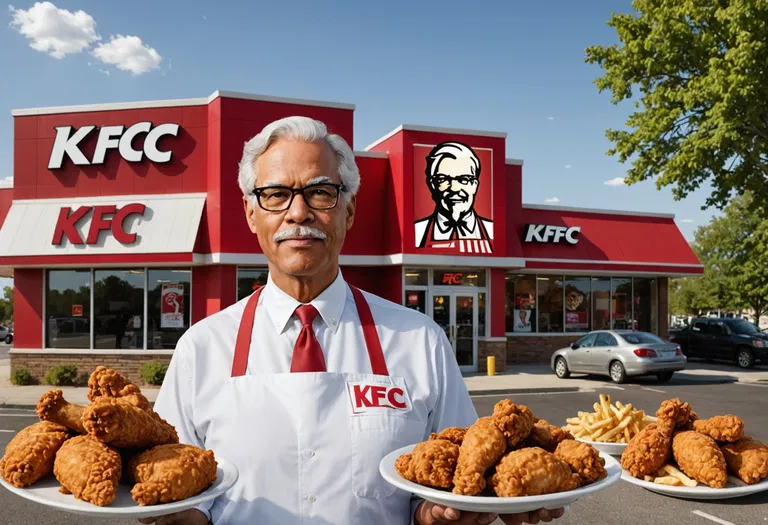
The news that KFC is closing stores has dominated headlines this week, and it is not just a business story. A major Kentucky Fried Chicken franchisee, Tasty Chick'n LLC, filed for Chapter 11 bankruptcy protection on November 16, 2026, sending 72 of its restaurants across 10 states toward closure. For anyone who cares about healthy eating, the closures are a timely reminder of what happens when a menu built on deep-fried chicken collides with shifting consumer habits, and exactly why fried fast food keeps landing on every serious foods-to-avoid list.
Tasty Chick'n, a Plano, Texas-based operator, ran 84 KFC and KFC/Taco Bell locations before the filing. Court records show the company entered bankruptcy owing roughly $73 million in funded debt and nearly $16 million in unpaid franchise royalties and fees. Management blamed a familiar fast-food squeeze: declining sales, rising food and labor costs, mounting operating expenses, and the pricey remodel requirements imposed by the brand.
Inside the Bankruptcy: Why Tasty Chick'n Is Shutting Down 72 KFCs
The operator's portfolio included 75 standalone KFC restaurants and nine co-branded KFC/Taco Bell locations spread across 10 states. The trouble had been brewing for months. By September 2026, KFC and its sister brand Taco Bell had issued a notice of intent to terminate the franchise agreements, citing unpaid fees, according to court filings reported by industry publications. That notice effectively forced Tasty Chick'n's hand, pushing the company into Chapter 11 in Houston in mid-November.
The numbers behind the collapse are stark. Nearly $73 million in funded debt sat on the books, alongside about $16 million in delinquent royalties. The closure list attached to the bankruptcy filing names 72 restaurants that have already shut or are slated to close. Memphis appears to be the hardest-hit metro area, with more than a dozen of its KFC locations on the list, according to coverage from Yahoo Finance and Rolling Out.
The reasons cited by management, including falling customer traffic, higher costs for chicken and cooking oil, rising wages, and expensive remodeling mandates, mirror pressures felt across the entire quick-service industry. But for KFC specifically, there is an added layer: fried chicken's growing reputation problem.
Timeline: How the KFC Closures Unfolded
The path to bankruptcy did not happen overnight. The sequence, drawn from court filings and news reports, looks like this:
- Earlier in 2026: Tasty Chick'n reports declining same-store sales as foot traffic softens and input costs climb.
- September 2026: KFC and Taco Bell issue a notice of intent to terminate the franchise agreements, alleging unpaid fees, effectively signaling the brand was ready to cut ties.
- November 16, 2026: Tasty Chick'n files for Chapter 11 bankruptcy protection in Houston, Texas, listing nearly $73 million in funded debt.
- November 17-19, 2026: The closure list goes public, identifying 72 restaurants across 10 states, with Memphis hit hardest.
Worth noting: this single franchisee's collapse is part of a larger pattern. Between July 2025 and July 2026, KFC closed more than 300 U.S. restaurant locations, with California, Texas, and Kansas among the most affected states, according to tracking by Delish and FinanceBuzz. The chain's physical footprint is shrinking even beyond this bankruptcy.
The Bigger Picture: What KFC's Decline Says About Fried Food and Your Health
Here is the part that matters most to your plate. KFC's troubles are financial, but they sit on top of a deeper, well-documented health story about deep-fried chicken. A single serving of KFC fried chicken packs roughly 1,042 milligrams of sodium per 100 grams, about 45 percent of the recommended daily value. That is before you add fries, biscuits, gravy, or a soda.
The fat profile is just as concerning. A single Original Recipe chicken breast carries about 320 calories and roughly 17 grams of fat, while a thigh clocks in near 363 calories, according to nutrition databases. Fried chicken is cooked in oil and coated in breading, which means it is high in saturated fat and, depending on the oil used, can contribute trans fats. The Cleveland Clinic warns that fried foods are calorie-dense and linked to gut issues, acid reflux, inflammation, and a higher risk of chronic disease.
The research is hard to ignore. Harvard's School of Public Health tied frequent fried-food consumption to a higher risk of type 2 diabetes and heart disease, and a 2019 BMJ review linked fried food intake with higher all-cause and cardiovascular mortality. Separately, a large study of more than 150,000 Veterans connected fried food consumption to a greater risk of coronary artery disease.
That health reality is almost certainly part of why sales have slipped. Consumers are gradually trading heavy fried meals for grilled, baked, and plant-forward options, and the fast-food giants that adapt by expanding lighter menu choices are faring better than those that lean on the deep fryer. Notably, KFC once tried grilled chicken as a healthier alternative but later pulled back from it, a reminder that the chain's core product remains the very fried fare health experts flag most. The KFC closures, in other words, are not just an accounting problem. They reflect a menu whose signature item is increasingly hard to defend as part of a healthy diet.
Where Things Stand Now: The Latest on the KFC Closures
As of the latest court filings, Tasty Chick'n plans to sell all 84 of its restaurants, the 75 KFC locations and nine co-branded stores, through the Chapter 11 process. Dozens have already closed, while others will shutter as the sale proceeds. The bankruptcy case is being administered in Houston, and the company has signaled that some locations may close outright if buyers do not emerge.
The 72 restaurants on the closure list span 10 states, with the Memphis region absorbing the largest single-city impact. For customers, that means checking local listings before heading out, since several locations have already locked their doors without fanfare.
What Happens Next for KFC and Fast-Food Diners
The immediate future involves a bankruptcy court, a potential auction of restaurant assets, and negotiations with Yum Brands, KFC's parent company. If new operators acquire the locations, some restaurants could reopen under new ownership. If not, the closures become permanent, further shrinking KFC's U.S. footprint.
For consumers, the bigger question is whether this marks a genuine turning point. Fried chicken is not going to disappear from America, but the financial strain on KFC and its franchisees is a signal that the old all-fried, all-the-time model is under pressure. That is good news for public health, and a strong argument for keeping fried fast food on your list of foods to avoid, or at least reserving it for the occasional treat.
The Bottom Line: Key Takeaways
- What happened: KFC franchisee Tasty Chick'n LLC filed for Chapter 11 bankruptcy on November 16, 2026, citing roughly $73 million in debt and nearly $16 million in unpaid royalties.
- The closures: 72 of its 84 KFC and KFC/Taco Bell locations across 10 states are closing or already closed, with Memphis hit hardest.
- The health angle: KFC fried chicken is extremely high in sodium (about 1,042 mg per 100 grams) and saturated fat, and frequent fried-food consumption is linked to heart disease, diabetes, and inflammation.
- The takeaway: The closures reflect shrinking demand for heavy fried fare, a trend that aligns with the case for avoiding fried fast food in favor of healthier, lower-sodium options.