
Kim Kardashian is opening up about a new health diagnosis that has her family on edge — and it centers on the esophagus, the very part of the body tied to her late father's death. In a Sept. 17 trailer for Season 8 of "The Kardashians," the Skims founder, 45, is diagnosed with esophagitis, a condition that causes inflammation in the muscular tube that carries food and drink from your mouth to your stomach.
The reveal immediately struck an emotional chord. Kim's father, Robert Kardashian, died of esophageal cancer in 2003 at just 59 years old. While esophagitis and esophageal cancer are separate conditions, chronic, untreated inflammation in the esophagus can — over time — lead to cell changes that raise the risk of cancer. For her mother, Kris Jenner, the diagnosis reopened old wounds.
"I Have Something Called Esophagitism": Kim's Reveal in Her Own Words
The diagnosis came to light in a teaser for the Hulu reality series, which premieres Oct. 8. "I have something called esophagitism," Kim says while getting her hair done. The clip then cuts to her lying in a hospital bed while a medical professional examines her.
An off-camera voice asks the question everyone in her circle is thinking: "Didn't your father… isn't it what he died of?" Kris Jenner's reaction is immediate and emotional. "I can't, it makes me want to cry," she says.

The trailer did not detail the severity of Kim's diagnosis or which type of esophagitis she has. According to USA Today, the condition "involves inflammation of the esophagus," and Kim has yet to share specifics publicly.
What Exactly Is Esophagitis?
Esophagitis is swelling and irritation of the tissues that line the esophagus, the hollow, muscular tube that runs from the throat down to the stomach. Cleveland Clinic describes the feeling as "sore, swollen, raw or burning." For many people, it shows up as heartburn, a sore throat, difficulty or pain when swallowing, or the sensation that food is stuck in the throat. In more severe cases, it can cause nausea, vomiting or even bleeding.
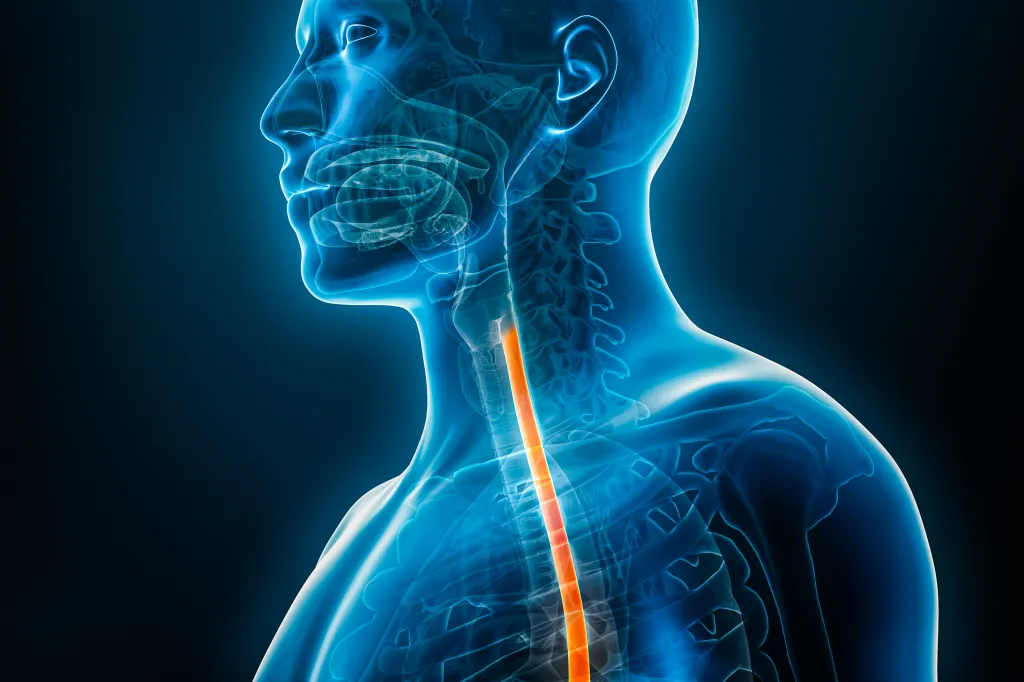
The most common cause is gastroesophageal reflux disease, or GERD, in which stomach acid repeatedly backs up into the esophagus. Chronic acid reflux affects at least 20% of the population, Cleveland Clinic notes. But acid isn't the only culprit: medications such as aspirin, NSAIDs, certain antibiotics and iron supplements can trigger "pill esophagitis," while infections, allergies and a rare immune condition called eosinophilic esophagitis round out the list of causes.
Foods and Drinks to Avoid With Esophagitis
Because reflux is the most common driver of esophagitis, what you eat — and when you eat it — plays a major role in healing. Cleveland Clinic recommends avoiding irritants such as spicy and acidic foods, alcohol and smoking while the esophagus recovers. On a day-to-day basis, experts advise identifying and cutting back on the foods and drinks that trigger acid reflux in the first place.
Common reflux triggers that can keep an inflamed esophagus from healing include:
- Spicy foods — hot sauces, chili and heavily seasoned dishes
- Acidic foods and drinks — citrus fruits, tomatoes, vinegar and coffee
- Fatty and fried foods — which can relax the valve between the stomach and esophagus
- Chocolate, mint and carbonated drinks — known triggers for many people
- Alcohol — which can irritate an already inflamed lining
During recovery, Cleveland Clinic also suggests leaning on a soft diet to reduce friction in the esophagus, taking small bites, chewing food well, and staying hydrated with water or soothing teas such as marshmallow and slippery elm.
Why the Diagnosis Hits Home: The Link to Esophageal Cancer
Kim's diagnosis is especially painful because of her family history. Robert Kardashian, the attorney best known for representing O.J. Simpson, died of esophageal cancer in September 2003 at age 59. Kris Jenner and Robert had Kim in 1980, along with Kourtney, Khloé and Rob Jr.

Esophagitis itself is not cancer, but persistent inflammation can set the stage for a condition called Barrett's esophagus, per the Mayo Clinic. In Barrett's esophagus, the cells lining the lower esophagus change to resemble intestinal cells as the body tries to repair ongoing acid damage. That cellular change is considered a precursor to esophageal cancer — which is why doctors often recommend monitoring for people with chronic reflux.
It's unclear whether Robert Kardashian was ever diagnosed with esophagitis or Barrett's esophagus before his cancer diagnosis, and Kim has not said whether her case is tied to acid reflux or another cause.
Simple Daily Habits That Help the Esophagus Heal
The good news: esophagitis is treatable, and the esophagus can heal once the source of irritation is removed. Treatment usually pairs medication with lifestyle changes. Acid-blocking drugs — antacids, H2 blockers and proton-pump inhibitors (PPIs) — are common first-line options for reflux-related cases.
Everyday habits make a real difference, too. Cleveland Clinic recommends eating smaller meals, especially at dinner, and finishing your last meal at least three hours before lying down so food has time to digest. Quitting smoking and avoiding alcohol also protect the esophagus. Healing typically begins right away once treatment starts, though it may take three to six weeks for the inflammation to fully clear.
What Comes Next for Kim — and When We'll Learn More
Kim has not yet revealed which type of esophagitis she has or what caused it. More details are expected to emerge when Season 8 of "The Kardashians" premieres Oct. 8 on Hulu.
The Bottom Line: What to Know About Esophagitis
- Esophagitis is inflammation of the esophagus, most often caused by chronic acid reflux (GERD).
- Common symptoms include heartburn, sore throat, painful swallowing and chest pain.
- Diet changes — cutting spicy, acidic, fatty and fried foods, plus alcohol — support healing.
- Left untreated, chronic esophagitis can lead to Barrett's esophagus, a risk factor for esophageal cancer.
- Kim Kardashian revealed her diagnosis in the Season 8 "Kardashians" trailer; the show premieres Oct. 8 on Hulu.