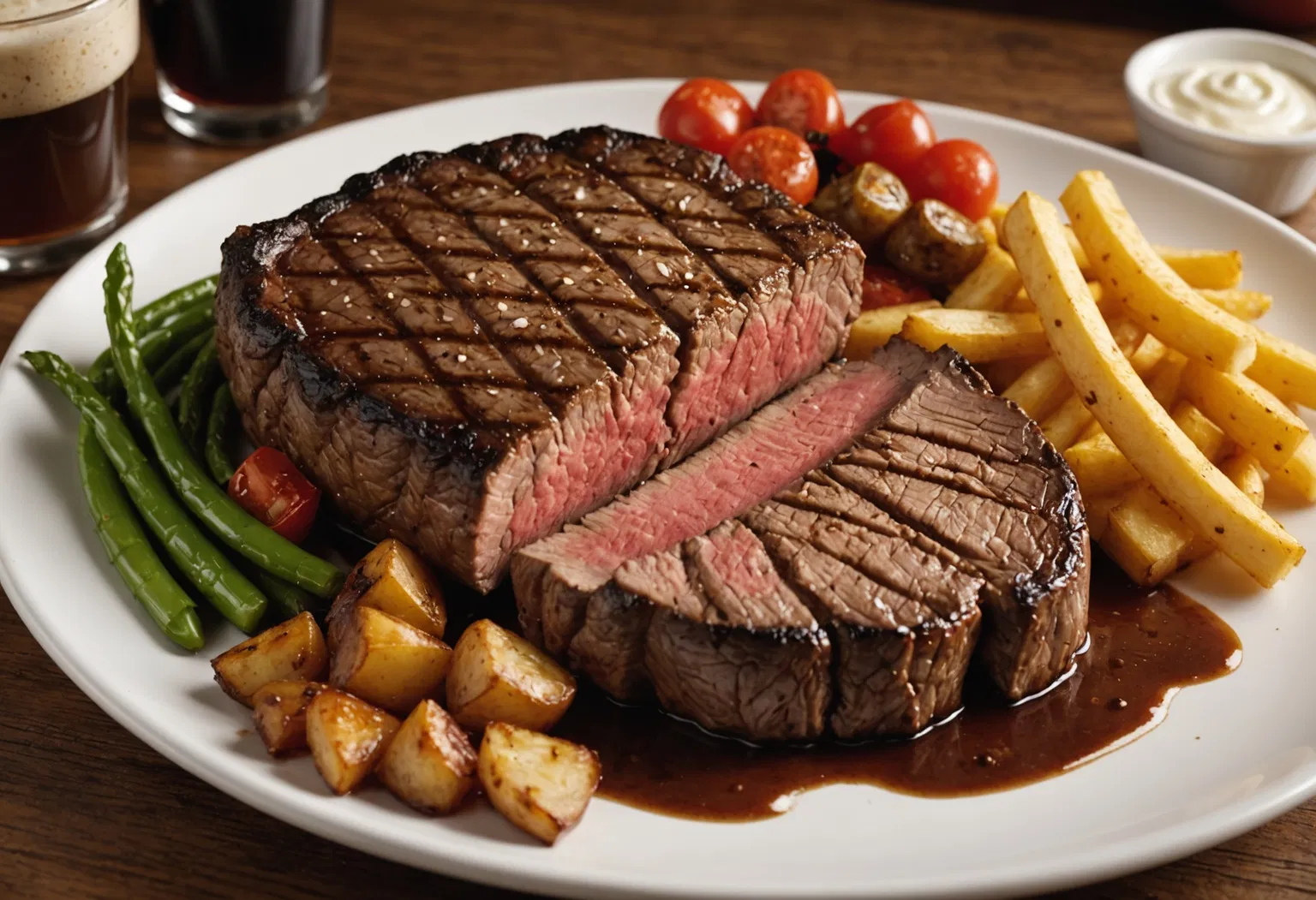
Kenneth Card, an Illinois man from Forsyth, set the internet's food corner buzzing this month after he claimed in a TikTok that his local Texas Roadhouse served him a $20 sirloin instead of the $30 filet mignon he ordered — not once, but three separate times. The video, which has now racked up more than 31,000 views and drawn coverage from People, Fox News, the New York Post and Today, has turned a routine wrong-order complaint into a full-blown conversation about what we're actually paying for — and eating — at the steakhouse. For anyone focused on healthy eating, fitness and hitting protein goals, the story doubles as a reminder that knowing your cut of steak isn't just about getting your money's worth; it's also about knowing exactly what's on your plate.
Here's what happened, how Texas Roadhouse responded, and — more importantly for your health goals — what separates a filet mignon from a sirloin and how to make smarter choices the next time you order steak.
What Kenneth Card Says Happened at Texas Roadhouse
Card, who has described himself as a former cook and a loyal Texas Roadhouse regular, took to TikTok in early October to warn other diners at the chain's Forsyth, Illinois location. In the clip, he said he ordered the pricier filet mignon on three separate visits but each time received a sirloin — a cut that typically costs about $10 less on the menu.
"Texas Roadhouse, shame on you," Card said while airing his complaint. He explained that, as someone with kitchen experience, he knows the difference between the cuts: "I know what types of meat I get whenever I order."
Card told outlets he wasn't looking for a payday, just transparency. "I just wanted to get the word out that, 'Hey, you're getting ripped off,'" he said. The TikTok drew swift reactions, with thousands of viewers sharing their own stories of suspecting their steak wasn't what they ordered.
How Texas Roadhouse Responded to the Viral Complaint
In a statement, Texas Roadhouse said Card's complaint had been "made right" by its team and that the company could not confirm that multiple mix-ups occurred. The chain acknowledged one corrected order mistake at the Forsyth location but pushed back on the idea of a broader pattern.
The response hasn't stopped Card from drawing his own line in the sand: he has said he's sworn off that particular location. The exchange highlights a broader reality of dining out — between the kitchen rush and the similar appearance of certain lean cuts, mix-ups can happen, and a savvy diner is often the only one who will notice.
Filet Mignon vs Sirloin: The Nutrition Behind the Complaint
At the heart of the viral dispute is a genuine difference between two lean cuts of beef that, to the untrained eye, can look deceptively similar once cooked and sliced.
Filet mignon comes from the tenderloin, a small, lightly used muscle that runs along the spine. Because that muscle does little work, filet is famously tender with a fine, uniform texture and very little intramuscular fat. Sirloin, by contrast, comes from the rear of the animal near the hip — a more active muscle that gives the cut a bit more chew and, in many cases, a slightly beefier flavor.
Nutritionally, both are among the leanest options on a steakhouse menu, and the differences between them are modest. A 6-ounce sirloin at Texas Roadhouse clocks in around 250 calories with 6 grams of fat, 2.5 grams of saturated fat and a hefty 46 grams of protein, according to nutrition data compiled by Verywell Fit. A comparable filet mignon portion delivers a similar protein punch and remains a lean choice, though exact numbers vary by preparation and trim.
For comparison, a 20-ounce bone-in ribeye at Texas Roadhouse can reach roughly 1,480 calories and 101 grams of fat — more than 15 times the fat of that 6-ounce sirloin. In other words, whether you're ordering filet or sirloin, you're choosing one of the better-for-you cuts; the real calorie traps at a steakhouse tend to be the heavily marbled ribeyes and prime rib.
Why the Cut on Your Plate Matters for Your Fitness Goals
Steak gets a mixed reputation in the wellness world, but lean cuts of beef are a legitimate source of high-quality nutrition. Red meat delivers complete protein — meaning all nine essential amino acids your body needs to build and repair muscle — along with highly absorbable iron, zinc and vitamin B12, which support energy, immunity and recovery.
The USDA defines a "lean" cut of beef as a 3.5-ounce serving with less than 10 grams of total fat and 4.5 grams of saturated fat. Both sirloin and tenderloin (filet) generally fit that bill, which is why nutritionists often point active people toward these cuts over fattier alternatives.
The bigger variable for most diners isn't filet versus sirloin — it's portion size and preparation. A 3-ounce serving of cooked lean beef is roughly the size of a deck of cards, yet steakhouse portions routinely run two to three times that. Add a loaded baked potato, butter-soaked vegetables and a basket of the restaurant's famous honey-cinnamon rolls, and the difference between a 250-calorie sirloin and a slightly higher-calorie filet becomes almost irrelevant compared with everything else on the plate.
How to Order a Smarter Steak the Next Time You Dine Out
Whether the Kenneth Card saga has you eyeing your own plate more carefully or simply thinking about healthier steakhouse habits, a few strategies can help:
- Learn the tell-tale shapes: Filet mignon is typically a small, round, thick medallion with a uniform shape, while sirloin is flatter, wider and more elongated. When in doubt, ask your server to confirm the cut before you dig in.
- Pick lean cuts: Sirloin, tenderloin (filet), top round and flank steak are the leanest choices. Ribeye, prime rib and T-bone carry far more fat.
- Watch the portion: Consider ordering a smaller cut (6 ounces or less) or boxing half your steak before you start eating.
- Balance the plate: Pair your steak with a vegetable side and a complex carb, and skip the butter-loaded extras.
- Mind the add-ons: Creamed spinach, mac and cheese and loaded potatoes can quietly add hundreds of calories on top of an otherwise lean protein.
Where the Texas Roadhouse Steak Complaint Stands Now
As of late October, Card's video continues to circulate with more than 31,000 views, and the story has been picked up by major national outlets. Texas Roadhouse maintains it addressed the complaint and could only verify a single corrected mix-up, while Card says he's done with the Forsyth location. No formal legal action has been reported.
The episode is less a food-safety scare than a consumer-transparency moment — one that has resonated because so many diners have quietly wondered the same thing: would I know if the kitchen swapped my steak?
The Bottom Line: Key Takeaways
- Kenneth Card's viral TikTok claims a Forsyth, Illinois Texas Roadhouse served him sirloin instead of the filet mignon he ordered on three occasions.
- Texas Roadhouse says it "made right" the complaint and could only confirm one corrected mix-up.
- Filet mignon and sirloin are both lean, high-protein cuts — with a 6-ounce sirloin providing about 250 calories and 46 grams of protein.
- For most diners, portion size and side dishes matter more to health than the difference between these two lean cuts.
- Knowing how to spot your cut — and ordering leaner, smaller portions — can help you eat smarter the next time you dine out.